A power outage should not force you to abandon your prescribed sleep-apnea therapy. A suitable portable power station can run many CPAP or APAP machines when household electricity is unavailable, but choosing one requires more care than simply buying the largest battery within your budget.
Your machine’s operating voltage, average power draw, humidifier and heated-tube use, approved DC accessories, and required backup time all affect the decision. Battery capacity is stated in watt-hours, but inverter losses mean the full advertised capacity is not normally available at an AC outlet.
Important medical and safety note: A consumer portable power station is not medical-grade backup equipment and should not be treated as a guaranteed uninterruptible power source for life-sustaining care. Confirm compatibility with your CPAP manufacturer or home medical-equipment provider. If interruption of therapy could create an immediate medical danger, ask your clinician about an appropriate medical backup plan.
Table of Contents
Quick Comparison
| Portable power station | Best for | Battery capacity | Rated AC output | Battery chemistry |
|---|---|---|---|---|
| Anker SOLIX C300 | Best overall compact pick | 288Wh | 300W | LiFePO4 |
| EcoFlow RIVER 3 Plus | Fast switching and expandable capacity | 286Wh | 600W | LiFePO4 |
| Jackery Explorer 300 v2 | Lightweight portability | 288Wh | 300W | LiFePO4 |
| BLUETTI AC70 | Longer outages and humidifier users | 768Wh | 1,000W | LiFePO4 |
| EcoFlow RIVER 3 Plus | Fast switching and expandable capacity | 286Wh | 600W | LiFePO4 |
Capacity alone does not guarantee a specific CPAP runtime. Check your device, accessories, pressure settings, environmental conditions, and connection method.
1. Anker SOLIX C300 — Best Overall Compact Pick
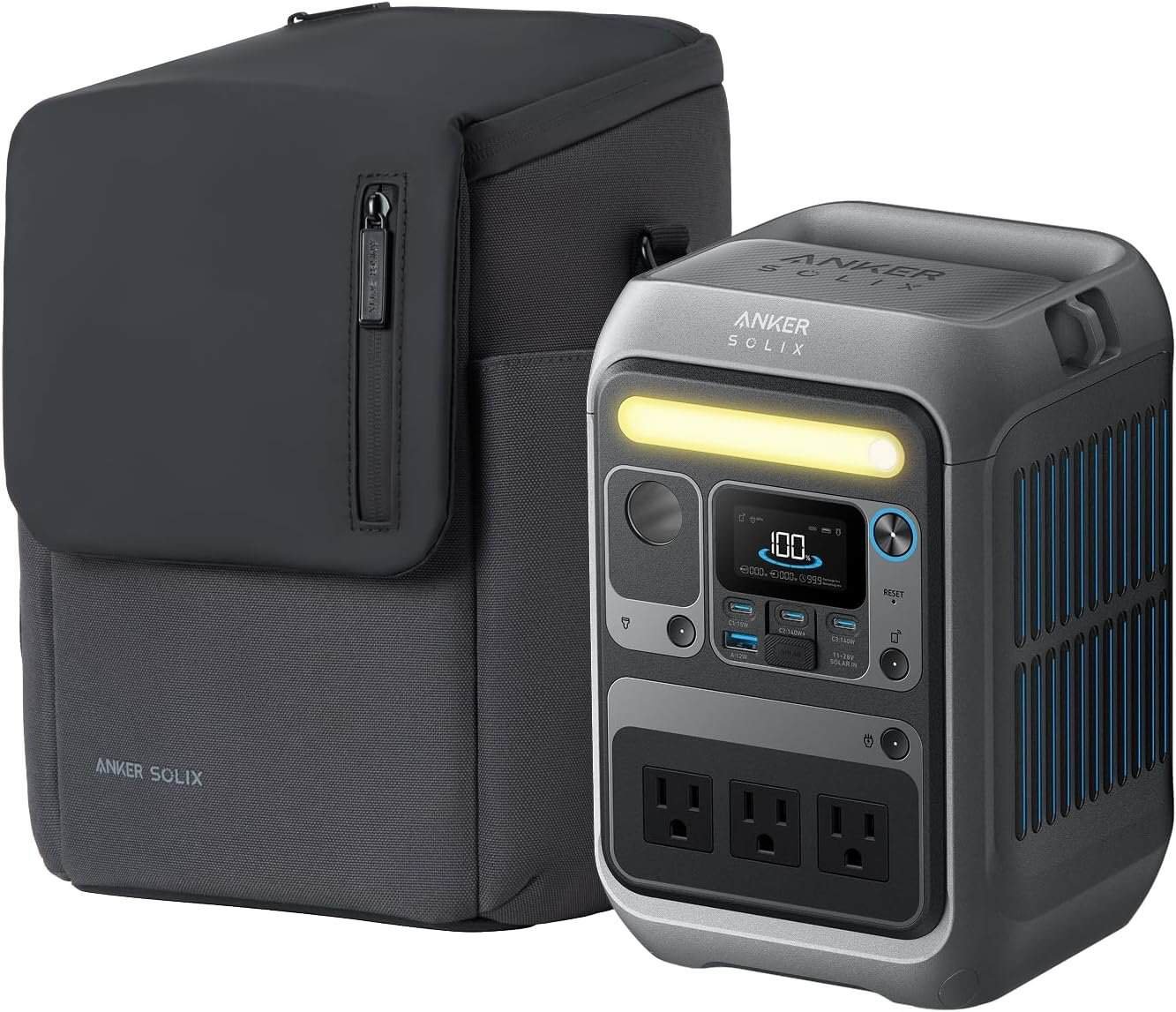
The Anker SOLIX C300 is a practical balance of portability, output options, and battery capacity. It stores 288Wh and supplies 300W of rated AC power. Anker’s support documentation specifically states that the C300 can power a CPAP machine, although users still need to confirm the requirements of their exact CPAP model.
At around this capacity, the C300 is most suitable for a single night or short outage when the CPAP has moderate power requirements. Turning off optional heating functions may materially extend runtime, but only make therapy-setting changes allowed by your device instructions or care provider.
 Pros
Pros
- Compact 288Wh LiFePO4 battery
- Manufacturer support material addresses CPAP use
- 300W rated AC output with higher surge handling
- Multiple recharging options, including AC, USB-C, vehicle, and compatible solar input
- Portable design for home backup and travel
Cons
- May not provide enough margin for a long outage with heated humidification
- The similarly named DC model does not include an AC outlet
- Final runtime must be tested with the actual CPAP setup
Best for: Users wanting a compact bedside backup for short outages or travel.
2. EcoFlow RIVER 3 Plus — Best Expandable Compact Option
The EcoFlow RIVER 3 Plus combines a 286Wh battery with a 600W AC output, providing far more output headroom than most CPAP systems require. Its main advantage is flexibility: compatible add-on batteries can increase total capacity when a basic 286Wh station is no longer sufficient.
EcoFlow advertises a transfer time of less than 10 milliseconds and a full AC recharge in about one hour under specified conditions. These features do not make it a medical UPS. Its manual says the product is not intended for life-sustaining medical equipment, including hospital-grade CPAP systems. Perform a supervised runtime test before depending on it overnight.
 Pros
Pros
- Compact 286Wh LiFePO4 battery
- 600W AC output
- Fast AC recharge
- Compatible with optional expansion batteries
- Quiet, compact design suitable for a bedroom
Cons
- Base capacity is still modest for multi-night outages
- Consumer UPS function is not a medical guarantee
- Manufacturer warns against use with life-sustaining medical equipment
Best for: Users who want a compact station with the option to add battery capacity later.
3. Jackery Explorer 300 v2 — Best Lightweight Pick
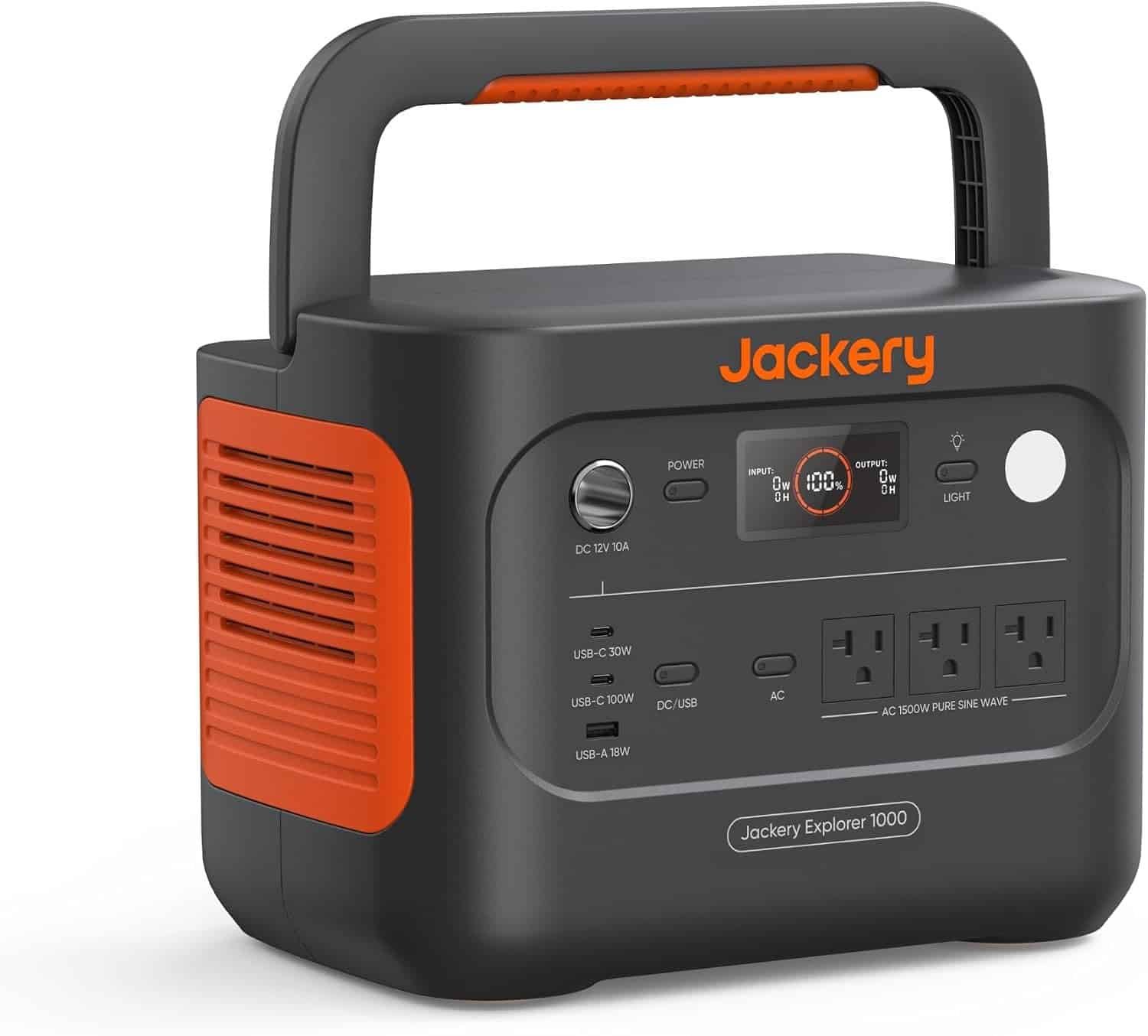
The Jackery Explorer 300 v2 offers 288Wh of capacity, 300W of continuous AC output, and a 600W surge rating in a unit weighing about 8.1 pounds. Its folding handle and compact shape make it one of the easier options to move between a bedroom, vehicle, and evacuation kit.
Jackery’s product information describes an output-continuity setting intended to prevent automatic shutdown during low loads. The company advises checking the operating specifications of the individual CPAP before assuming compatibility.
 Pros
Pros
- Lightweight 8.1-pound design
- 288Wh LiFePO4 battery
- 300W continuous pure-sine-wave AC output
- Continuous-output option for low-draw equipment
- Compact enough for travel and emergency storage
Cons
- Limited reserve for prolonged outages
- Only one AC receptacle on the compact design
- Heated humidification may substantially shorten runtime
Best for: Travelers and users who need the lightest practical conventional power station.
4. BLUETTI AC70 — Best for Longer Outages
The BLUETTI AC70 steps up to a 768Wh LiFePO4 battery, a 1,000W pure-sine-wave inverter, and a regulated 12V vehicle-style outlet. The additional capacity offers considerably more planning margin than the compact 288Wh class, especially for users who need heated humidification or want to recharge phones and other small essentials during an outage.
The regulated 12V output may be useful when paired with a CPAP manufacturer’s approved DC converter. A proper DC connection can avoid the losses involved in converting battery power to AC and then back to DC through the CPAP’s wall adapter. Never improvise a cable based only on connector shape.
 Pros
Pros
- Larger 768Wh LiFePO4 battery
- 1,000W pure-sine-wave inverter
- Regulated 12V output for compatible approved adapters
- Fast AC charging and substantial solar input
- Five-year published warranty
Cons
- Heavier and bulkier than 288Wh models
- More capacity and output than some users need
- Fan noise may occur during heavy charging or operation
Best for: Longer outages, heated-humidifier users, and households needing extra emergency capacity.
5. EcoFlow RIVER 3 Plus — Best Expandable Compact Option
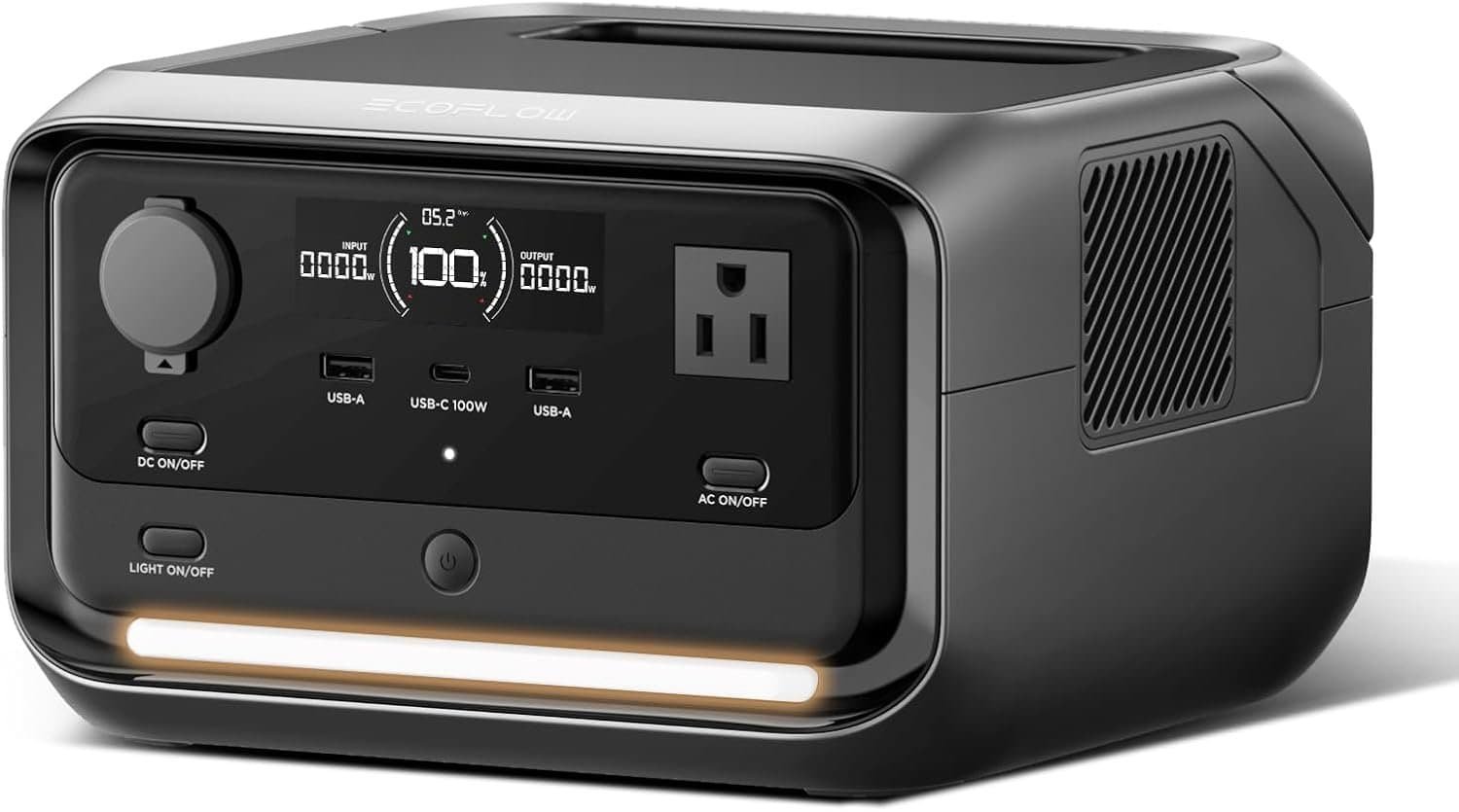
The EcoFlow RIVER 3 Plus combines a 286Wh battery with a 600W AC output, providing far more output headroom than most CPAP systems require. Its main advantage is flexibility: compatible add-on batteries can increase total capacity when a basic 286Wh station is no longer sufficient.
EcoFlow advertises a transfer time of less than 10 milliseconds and a full AC recharge in about one hour under specified conditions. These features do not make it a medical UPS. Its manual says the product is not intended for life-sustaining medical equipment, including hospital-grade CPAP systems. Perform a supervised runtime test before depending on it overnight.
 Pros
Pros
- Compact 286Wh LiFePO4 battery
- 600W AC output
- Fast AC recharge
- Compatible with optional expansion batteries
- Quiet, compact design suitable for a bedroom
Cons
- Base capacity is still modest for multi-night outages
- Consumer UPS function is not a medical guarantee
- Manufacturer warns against use with life-sustaining medical equipment
Best for: Users who want a compact station with the option to add battery capacity later.
How Much Battery Capacity Does a CPAP Need?
The most reliable method is to measure the complete CPAP setup with an AC power meter during normal sleep, then add a meaningful safety margin. Nameplate wattage represents a maximum or adapter rating and may be much higher than the average draw.
A rough AC estimate is:
Runtime in hours = battery watt-hours × usable-efficiency factor ÷ average CPAP watts
For example, a 288Wh battery with an assumed 80% usable AC output provides roughly 230Wh. At a measured 40W average draw, the mathematical estimate is about 5.7 hours. At 15W, it is roughly 15 hours. These are planning examples, not promised runtimes.
Actual results vary with therapy pressure, mask leakage, heating settings, temperature, inverter losses, battery age, automatic shutoff settings, and other connected equipment.
Test the system before an emergency. Start with a fully charged station, reproduce the intended settings, and monitor the remaining charge. Do not perform a first-time test when losing therapy would be unsafe.
AC Outlet or DC Converter?
Using the normal AC adapter is simple, but conversion losses reduce runtime. An approved DC-to-DC converter may improve efficiency. It must match the exact CPAP model and voltage; a generic cable with the correct-looking plug can still damage the machine.
Features to Check Before Buying
Pure Sine Wave AC Output
If you will use the original wall adapter, choose a pure-sine-wave output unless the CPAP manufacturer explicitly permits something else. ResMed’s battery guide recommends a pure-sine-wave inverter for applicable systems.
Continuous-Output Mode
Some power stations automatically disable an output when the load appears too low. Look for an option that keeps the required AC or DC port active throughout the night, and test it with your machine.
Recharge Options
AC fast charging is valuable when grid power returns briefly. Compatible solar panels can help during a long emergency, but solar output depends on weather, season, shade, panel angle, and daylight hours. A vehicle-charging option provides another route, but never run a vehicle in a garage or other enclosed space.
Safe Setup for an Outage
- Confirm the CPAP’s voltage, wattage, and approved power accessories.
- Fully charge the power station and update any required settings before severe weather.
- Disable inappropriate automatic output timeouts according to the power-station manual.
- Place the unit on a hard, stable surface away from water, blankets, and direct heat.
- Connect only the CPAP during the initial test.
- Verify that therapy starts normally and remains active for the planned sleep period.
- Keep the original power adapter, approved DC converter, cables, and instructions together.
- Recharge it after use and follow the manufacturer’s storage schedule.
Never place the battery inside bedding, operate it while wet, use damaged cords, or exceed its temperature and output limits. Do not rely on pass-through or UPS functionality without reading the manufacturer’s limitations.
Frequently Asked Questions
Will a 300Wh power station run a CPAP all night?
It may run an efficient CPAP for one night, particularly without optional heating, but there is no universal guarantee. Measure the actual setup, account for inverter losses, and complete a trial run. Users needing humidification or a wide safety margin may prefer a larger battery.
Can I use the heated humidifier during an outage?
Often yes, if the power station supports the total load, but heating can significantly increase energy use. Follow your clinician’s and CPAP manufacturer’s guidance before changing humidification or heated-tube settings.
Should I buy the largest station possible?
Not necessarily. Larger batteries provide more reserve but cost and weigh more. Choose capacity based on measured consumption, outage duration, recharge access, portability, and a suitable safety margin.
Final Verdict
The Anker SOLIX C300 is our best overall compact pick because it balances 288Wh capacity, conventional AC output, portability, and manufacturer support information addressing CPAP use. The EcoFlow RIVER 3 Plus is appealing for fast switching and expandable capacity, while the Jackery Explorer 300 v2 is a strong lightweight alternative.
For longer outages, the BLUETTI AC70 provides a much larger 768Wh reserve and a regulated 12V output. The Jackery Explorer 1000 v2 is the most capable choice here for extended emergency preparedness.
Whichever model you select, verify compatibility with the CPAP manufacturer, use approved cables, calculate capacity from measured power consumption, and test the complete setup before relying on it during an outage.