Apartment living makes traditional composting difficult. You may not have a yard, space for a tumbler, or access to a municipal food-scrap program. Keeping scraps in an ordinary kitchen bin can also attract insects and create unpleasant odors long before collection day.
An electric composter—or, more accurately in many cases, an electric food recycler—offers a cleaner alternative. These appliances use heat, airflow, grinding, or microbes to reduce the volume of kitchen waste. Compact models can fit on a countertop or beside a trash can, making them appealing to renters and people with small kitchens.
However, the category can be confusing. Dehydrating machines create dry, ground food scraps rather than mature compost. Microbial models perform biological decomposition but usually need more floor space and ongoing care. This guide explains those differences and compares five strong options for apartments.
Table of Contents
Quick Comparison
| Product | Best for | Type | Capacity or processing rate | Approximate size |
|---|---|---|---|---|
| Lomi 3 | Best overall countertop pick | Heat, drying, and grinding | Manufacturer claims up to 80% waste reduction | Compact countertop appliance |
| Airthereal Revive R500 | Best value for small kitchens | Heat, drying, and grinding | 2.5 L | 12.5 × 10 × 12.5 in |
| FoodCycler Eco 5 | Best for higher countertop capacity | Heat, drying, and grinding | 5 L | About 13.5 × 10.9 in footprint |
| Reencle Prime | Best microbial option | Continuous biological processing | 700 g recommended daily; 1 kg maximum | 12 × 13 × 18.4 in |
| Mill Food Recycler | Best floor-standing option | Drying and grinding | 6.5 L | 27 × 17 × 14 in |
1. Lomi 3 Food Recycler — Best Overall Countertop Pick
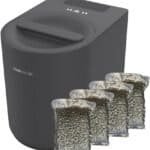
The Lomi 3 is designed for households that want a polished, mostly hands-off way to reduce food-scrap volume. It uses controlled heat and grinding to turn compatible scraps into a dry, soil-like material. Lomi says the machine can reduce waste by as much as 80 percent, and its starter filter supply is expected to last approximately 45 cycles or three months. genui{“citation”:{“ref”:”turn15search0″}}
For apartment users, the main appeal is convenience. The enclosed bucket and carbon filtration can help keep food residue out of the main trash bin. The machine also looks more like a premium kitchen appliance than an outdoor composting device.
 Why it works well in apartments
- Countertop-friendly design for kitchens without outdoor space
- Enclosed processing helps control everyday food-waste odors
- Multiple operating modes for different types of output
- Straightforward loading and one-appliance workflow
- App-supported food lookup on compatible versions
Limitations
Lomi 3 is expensive, and replacement filters add an ongoing cost. It also does not create fully mature compost during a short cycle. A long-term evaluation described it more accurately as a dehydrator and grinder; its dry output continues decomposing after it is rehydrated and may require further composting or careful mixing before garden use. genui{“citation”:{“ref”:”turn15news45″}}
Best for: One- or two-person households that want a premium countertop recycler and have a clear plan for the processed material.
Consider another model if: Purchase price and replacement-filter costs are your main concerns.
Amazon.com: FoodCycler Eco 3 Food Waste Recycler with 4-Pack Carbon Filters – Kitchen Countertop Composter Alternative with Odor Control – Compact, Efficient, Easy to Maintain: Home & Kitchen
2. Airthereal Revive R500 — Best Value for Small Kitchens
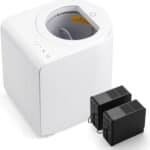
The Airthereal Revive R500 is one of the most compact options in this roundup. Its 2.5-liter bucket and 12.5 × 10 × 12.5-inch body make it easier to place beneath upper cabinets than taller microbial machines. Airthereal lists a processing range of two to seven hours and claims waste-volume reduction of up to 90 percent. genui{“citation”:{“ref”:”turn15search2″}}
The R500 dries and grinds scraps into a reduced-volume powder. This can make food waste easier to store until trash collection or transport to a community composting site. Its removable bucket also simplifies loading and cleaning.
 Why it works well in apartments
- Small 2.5-liter bucket suits individuals and couples
- Compact footprint preserves more counter space
- Faster cycles than many biological composting systems
- Simple controls reduce the learning curve
- Lower entry price than many premium competitors
Limitations
The small bucket may require frequent cycles for households that cook every day. As with similar heat-and-grind appliances, the output should not automatically be treated as finished compost. Follow the manufacturer’s guidance before adding it to plants or soil.
Independent long-term testing praised the similarly sized Revive V500 for its compact footprint and affordability, but noted that limited capacity requires more frequent processing and that bucket coating can wear over time. genui{“citation”:{“ref”:”turn15news44″}}
Best for: Renters, couples, and small-kitchen owners who want an affordable countertop food recycler.
Consider another model if: Your household produces several liters of scraps every day.
Amazon.com : Airthereal R500-V Electric Composter, Visual Glass Cover, 2.5L, Pearl White | Visual Glass Cover, Upgraded SHARKSDEN Tri-blade, 90% Reduction in Waste Volume : Home & Kitchen
3. FoodCycler Eco 5 — Best for Higher Countertop Capacity
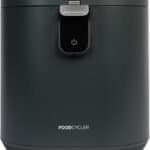
The FoodCycler Eco 5 offers a larger five-liter bucket—twice the capacity of the older FC-50 generation. Vitamix says it grinds food waste into a fine, dry material that occupies less bin space. genui{“citation”:{“ref”:”turn15search11″}}
That added capacity can be useful for an apartment household of three or four people, especially if counter or pantry space is available. The machine operates through drying, grinding, and cooling stages. Its manual lists average energy use below 1.5 kWh per cycle, though actual consumption will vary with the load and local conditions. genui{“citation”:{“ref”:”turn15search7″}}
 Why it works well in apartments
- Five-liter bucket holds more scraps between cycles
- Removable processing bucket supports easier cleanup
- Refillable filter system may reduce complete filter-cartridge waste
- One-button operation is simple for shared households
- Useful middle ground between compact recyclers and floor-standing units
Limitations
The Eco 5 is larger and heavier than the R500, so it may be awkward on a crowded counter. Measure the appliance footprint, lid-opening clearance, and outlet location before ordering. Filters and carbon pellets are recurring expenses.
Best for: Families or frequent home cooks who need more capacity without moving to a trash-can-sized machine.
Consider another model if: Your available counter depth is extremely limited.
Amazon.com: Food Cycler Eco 5 Award-Winning Kitchen Food Recycler | Indoor Composter Bin Alternative | Electric Countertop Food Disposer with Odorless 5L Indoor Food Waste Bin for Easy Waste Management | Grey: Home & Kitchen
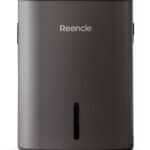
4. Reencle Prime — Best Microbial Electric Composter
Reencle Prime differs from most countertop food recyclers. It uses microbes, heat, and continuous stirring to biologically break down scraps. Instead of filling a bucket and running a short batch cycle, users can add compatible food waste throughout the day.
The manufacturer lists dimensions of 12 × 13 × 18.4 inches, a recommended daily input of about 1.5 pounds, and a maximum of 2.2 pounds. genui{“citation”:{“ref”:”turn16search4″}} Its specified average noise level is 28 dB, and Reencle recommends carbon-filter replacement every nine to twelve months. genui{“citation”:{“ref”:”turn16search0″}}
 Why it works well in apartments
- Produces biologically processed material rather than only dried scraps
- Continuous operation allows food to be added throughout the day
- Quiet specified operation is useful in open-plan apartments
- Three-layer filtration is designed to control odors
- Appropriate for residents who want usable compost for plants or a community garden
Limitations
At 18.4 inches tall—and considerably taller with the large lid open—the Prime may not fit beneath low cabinets. It needs ongoing microbial balance, suitable food inputs, and sufficient clearance for ventilation and lid movement. The output may also need curing or sifting before use.
Best for: Apartment gardeners who want a genuine biological process and can dedicate floor or counter space to it.
Consider another model if: You want occasional batch processing with minimal biological maintenance.
5. Mill Food Recycler — Best Floor-Standing Option
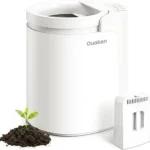
The Mill Food Recycler is closer in size to a slim kitchen trash can than a countertop appliance. Its advantage is capacity: the current model has a 6.5-liter processing bucket, and Mill says it can process a cumulative 40 pounds of scraps between emptying, depending on food type and usage. genui{“citation”:{“ref”:”turn16search13″}}
The unit dries and grinds food scraps gradually while controlling odors through a carbon filter. Mill lists dimensions of 27 × 17 × 14 inches and says the carbon filter can last up to 12 months. genui{“citation”:{“ref”:”turn16search12″}} Because it lives on the floor, it preserves counter space even though its total volume is larger than the other machines here.
 Why it works well in apartments
- Floor-standing design avoids sacrificing countertop preparation space
- Large effective capacity means less frequent emptying
- Suitable for households that generate varied food scraps
- Slow, automatic processing integrates with everyday disposal
- Long filter interval can reduce maintenance frequency
Limitations
Mill is not truly compact overall. It needs a dedicated patch of floor, access to an outlet, and clearance for its lid. The premium purchase price and proprietary replacement supplies should be included in the long-term budget.
Best for: Larger apartment households with more floor space than counter space.
Consider another model if: You live in a studio or need an appliance that can be stored in a cabinet.
Electric Composter vs. Food Recycler: What Is the Difference?
The term “electric composter” is used broadly, but the output varies by technology.
Heat-and-grind food recyclers
Models such as Lomi, Airthereal, FoodCycler, and Mill typically dehydrate and grind scraps. They reduce weight, volume, moisture, and odor, but the result is not automatically mature compost. It may be suitable for municipal composting, further backyard composting, or limited soil use only when the manufacturer provides appropriate instructions.
Microbial electric composters
Reencle uses living microorganisms and continuous mixing. This is closer to composting, but users still need to manage moisture, feeding limits, maintenance, and the final material correctly.
This distinction matters in an apartment. If your main goal is cleaner trash and less odor, a compact dehydrating recycler may be enough. If you want material for plants, prioritize a biological system and learn how its output should be cured and applied.
How to Choose an Electric Composter for an Apartment
Measure the full operating space
Measure width, depth, height, and lid-opening clearance—not just the appliance footprint. Leave the ventilation space required by the manufacturer and avoid placing a heat-producing machine inside a closed cabinet while it runs.
Match capacity to your household
A 2.5-liter unit can suit one person but may frustrate a family that cooks frequently. Larger capacity reduces cycle frequency, but the machine will occupy more space and may use more energy per load.
Think about noise and timing
In a studio apartment, even modest motor or grinding sounds may be noticeable at night. Check published noise information where available and consider running batch machines during the day.
Calculate recurring costs
Replacement carbon, filters, microbial starter, cleaning supplies, and electricity all affect ownership cost. A cheaper machine with frequent proprietary filter replacement may cost more over several years than expected.
Plan for the output before buying
Decide whether the processed material will go into household trash, a municipal organics bin, a community garden, a worm bin, or soil after further processing. Do not assume every dry, brown output is safe to place directly around houseplants.
Check your lease and electrical setup
Use a grounded outlet that matches the product’s voltage requirements. Keep the appliance on a level, heat-resistant surface and follow all clearance instructions. If the only available location is in a shared hallway, balcony, or enclosed utility cabinet, check building and lease rules first.
Frequently Asked Questions
Do electric composters create real compost?
Some microbial machines perform biological decomposition, but many popular countertop units mainly dry and grind food. Their output may need additional composting or careful soil mixing before use.
Do electric composters smell?
Well-maintained machines are designed to control odors with enclosed lids and carbon filtration. Odors can still occur if filters are exhausted, prohibited foods are added, the bucket is overloaded, or a microbial system becomes unbalanced.
Are electric composters safe in apartments?
They can be appropriate when used exactly as instructed. Provide ventilation clearance, use the correct electrical supply, keep air openings unobstructed, and do not operate a heat-producing appliance inside a sealed cabinet.
How much electricity do they use?
Usage varies substantially. Batch dehydrators draw more power during a short cycle, while microbial systems may use lower continuous power. Compare manufacturer energy figures and local electricity rates rather than relying only on wattage.
Can I put processed scraps directly into houseplants?
Not automatically. Concentrated, incompletely decomposed food material can encourage mold, odors, or pests. Follow the specific manufacturer’s directions and use further curing or composting when required.
Final Verdict
For most apartment dwellers seeking a polished countertop machine, the Lomi 3 is the strongest all-around choice, provided its premium price and filter costs fit the budget. The Airthereal Revive R500 is the best compact value for individuals and couples, while the FoodCycler Eco 5 offers more capacity for frequent cooking.
Choose the Reencle Prime if biological processing and usable compost matter more than compact dimensions. The Mill Food Recycler is better for larger households that can spare floor space but want to keep counters clear.
Whichever model you choose, measure carefully and decide what you will do with the output before buying. The right electric composter should solve an apartment-specific problem—odor, limited bin space, or lack of outdoor composting—not simply add another expensive appliance to a crowded kitchen.