A slow drip beneath the kitchen sink or a leaking appliance in the basement can go unnoticed for hours—or even days. By the time you discover it, a relatively minor plumbing problem may have soaked cabinets, flooring, drywall, or belongings stored nearby.
A smart water leak detector provides an inexpensive extra layer of protection.
These small sensors are placed near areas where water shouldn’t appear, such as beneath sinks, beside washing machines, near water heaters, behind refrigerators, or around basement plumbing. When moisture reaches the sensor, it can sound an alarm and, depending on the system, send an alert to your smartphone.
The EPA says household leaks can waste thousands of gallons of water each year, while leak-detection and flow-monitoring devices can help identify unexpected moisture or unusual water use before the problem becomes worse.
For this guide, we’ve selected five of the best smart water leak detectors for kitchens and basements, ranging from affordable multi-sensor systems to a more comprehensive whole-home solution.
Table of Contents
Quick Comparison
| Product | Best For | Connection | Hub |
|---|---|---|---|
| GoveeLife Water Leak Detector 2 | Best Overall | Long-range wireless | Depends on kit |
| YoLink Water Leak Detection Starter Kit | Best for Large Homes & Basements | LoRa-based system | Yes |
| Flo by Moen Smart Water Monitor & Shutoff | Best Whole-Home Protection | Wi-Fi | No separate sensor hub |
| Aqara Water Leak Sensor | Best for Smart Homes | Zigbee | Aqara hub required |
| X-Sense Wi-Fi Water Leak Detector Kit | Best Multi-Sensor Kit | Wi-Fi/base station | Yes on applicable kits |
Specifications, bundles, compatibility, and included accessories can change. Check the exact product listing before purchasing.
1. GoveeLife Water Leak Detector 2 — Best Overall
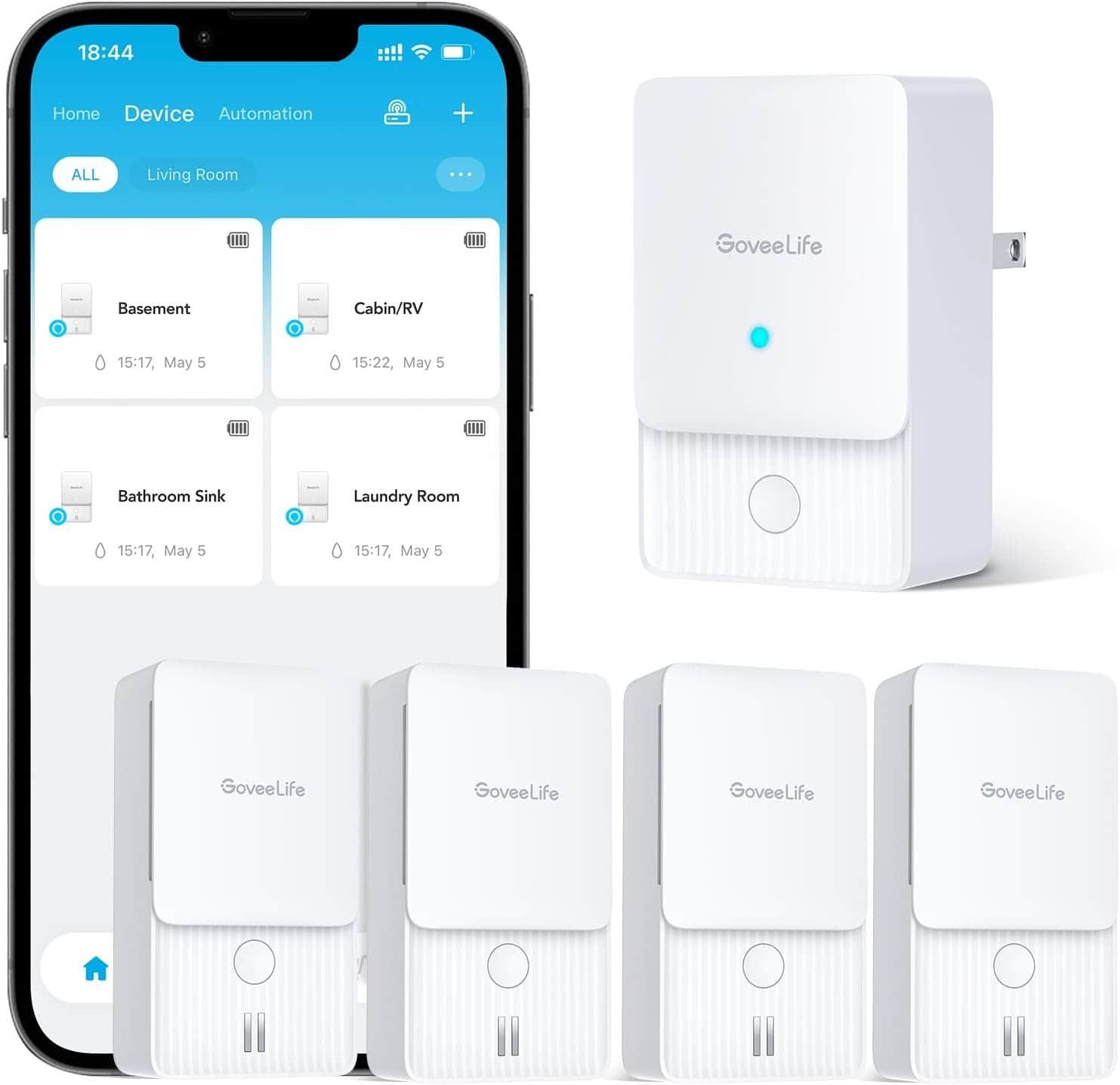
The GoveeLife Water Leak Detector 2 is our best overall choice for homeowners who want straightforward leak detection without turning the project into a complicated smart-home installation.
GoveeLife’s system is particularly attractive when you need several sensors. Instead of protecting only one appliance, you can distribute compatible sensors around the home.
For example, one could go underneath the kitchen sink, another beside the dishwasher, another near the washing machine, and additional sensors around basement plumbing.
That’s important because water leaks aren’t limited to one obvious location.
Recent 2026 comparisons continue to highlight Govee as a strong budget-friendly option for covering multiple areas of a home, and homeowners discussing leak sensors frequently mention using Govee units under sinks, around washers, and in other vulnerable areas.
What We Like
- Good choice for protecting multiple locations
- Smartphone notifications with compatible setup
- Audible local alarm
- Suitable for kitchens, basements, laundry rooms, and bathrooms
- Straightforward approach to leak monitoring
- Attractive option for buyers who want multiple sensors
 What Could Be Better
Pay close attention to which package you’re purchasing.
Govee and GoveeLife sell different leak-detector generations and bundles, and connectivity requirements aren’t necessarily identical across every model.
If remote phone alerts are important, make sure the exact kit you purchase includes everything necessary for them.
Best Placement
Put one underneath or immediately beside appliances and plumbing where escaping water is likely to reach the floor:
- Kitchen sink
- Dishwasher
- Refrigerator water line
- Washing machine
- Basement water heater
- Utility sink
Who Should Buy It?
Homeowners who want a practical, scalable leak-detection system for several vulnerable areas without paying for a whole-home plumbing installation.
Verdict: Our best overall option for balancing coverage, smart alerts, and value.
2. YoLink Water Leak Detection Starter Kit — Best for Basements & Large Homes
Basements can present a connectivity problem.
Your router may be upstairs, while the sensor you need to monitor sits near a water heater, sump area, utility room, or appliance several floors away.
That’s where the YoLink Water Leak Detection Starter Kit becomes particularly interesting.
YoLink’s ecosystem is known for long-range connectivity, making it well suited to larger homes and locations where conventional smart-home wireless coverage may be less reliable.
Starter kits typically combine a hub with multiple leak sensors, allowing you to protect several areas immediately.
For a basement, that could mean placing sensors near the water heater, washing machine, utility sink, and another vulnerable plumbing point.
 What We Like
- Excellent choice for large homes
- Particularly appealing for basement installations
- Multiple-sensor starter kits available
- Loud local alarms on applicable sensors
- Smartphone notifications
- Expandable smart-home ecosystem
- Long-range communication is a major advantage
What Could Be Better
You’ll need the appropriate YoLink hub/system to access the connected features.
That adds another component compared with completely standalone Wi-Fi sensors, although the hub becomes more useful if you expand into additional YoLink devices.
Why We Like It for Basements
A water detector isn’t useful if it can’t reliably communicate from the location you’re protecting.
YoLink’s emphasis on long-range communication makes the system particularly compelling for:
- Basements
- Garages
- Large houses
- Detached structures
- Utility rooms far from the router
Recent homeowner discussions also continue to recommend YoLink for multi-sensor leak detection and automatic-shutoff configurations.
Who Should Buy It?
Anyone with a large property or basement where wireless range is a major consideration.
Verdict: Our favorite system when range and multi-room coverage matter more than having the simplest possible Wi-Fi sensor.
3. Flo by Moen Smart Water Monitor & Shutoff — Best Whole-Home Protection
The Flo by Moen Smart Water Monitor & Shutoff belongs in a different category from the small sensors elsewhere in this guide.
Rather than simply sitting on the floor waiting for water to touch it, Flo monitors the home’s water system and can provide whole-home water-management functionality, including automatic shutoff capabilities.
That makes it considerably more expensive and more involved to install—but also potentially much more powerful.
A floor sensor can tell you there’s water underneath your dishwasher.
A whole-home system can potentially respond at the water-supply level.
 What We Like
- Whole-home approach to water monitoring
- Automatic water shutoff functionality
- Smartphone monitoring
- Designed to detect unusual water behavior
- Useful for homeowners wanting more comprehensive protection
- Particularly interesting for second homes and frequent travelers
What Could Be Better
Cost.
This is a completely different investment from putting an inexpensive battery-powered sensor underneath a sink.
Installation is also more involved because the system interacts with the home’s main plumbing.
Depending on your setup and experience, professional installation may be the sensible choice.
Spot Detector vs. Whole-Home Monitor
This distinction is important.
A spot detector reacts when water reaches a particular location.
A flow-monitoring system watches water moving through the home’s plumbing and looks for unusual patterns.
The EPA recognizes both approaches as useful leak-detection technologies.
For maximum protection, some homeowners may even use both: whole-home monitoring plus spot sensors in particularly vulnerable locations.
Who Should Buy It?
Homeowners who want to go beyond receiving an alert and invest in a more comprehensive water-monitoring and shutoff solution.
Verdict: The premium option for whole-home protection rather than just individual leak-prone locations.
4. Aqara Water Leak Sensor — Best for Smart-Home Users
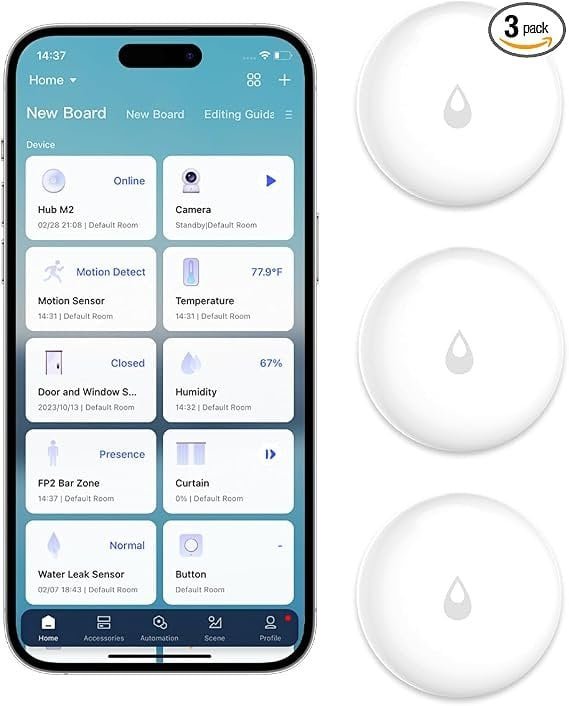
If you already use Aqara products—or you’re building a broader home-automation system—the Aqara Water Leak Sensor is an appealing compact option.
The sensor uses the Aqara smart-home ecosystem and requires a compatible hub for its connected functionality.
Once integrated, its real advantage is automation.
Instead of treating a water sensor as an isolated alarm, smart-home enthusiasts can incorporate leak detection into a wider network of devices and routines, depending on their hub and platform configuration.
What We Like
- Small and unobtrusive
- Good fit for established smart homes
- Smart-home automation possibilities
- Easy to place in confined spaces
- Useful underneath cabinets and appliances
- Expandable Aqara ecosystem
 What Could Be Better
A compatible Aqara hub is required for the intended smart functionality.
That makes it less attractive if you’re purchasing only one sensor and have no interest in the rest of the ecosystem.
For an existing Aqara user, however, that same requirement isn’t much of a drawback.
Ideal Locations
The compact form makes it particularly suitable for:
- Under kitchen cabinets
- Beneath sinks
- Near dishwashers
- Behind toilets
- Laundry areas
- Basement utility spaces
Who Should Buy It?
People who already own an Aqara hub or want leak detection incorporated into a larger smart-home setup.
Verdict: A particularly good choice for automation enthusiasts rather than someone wanting a completely independent detector.
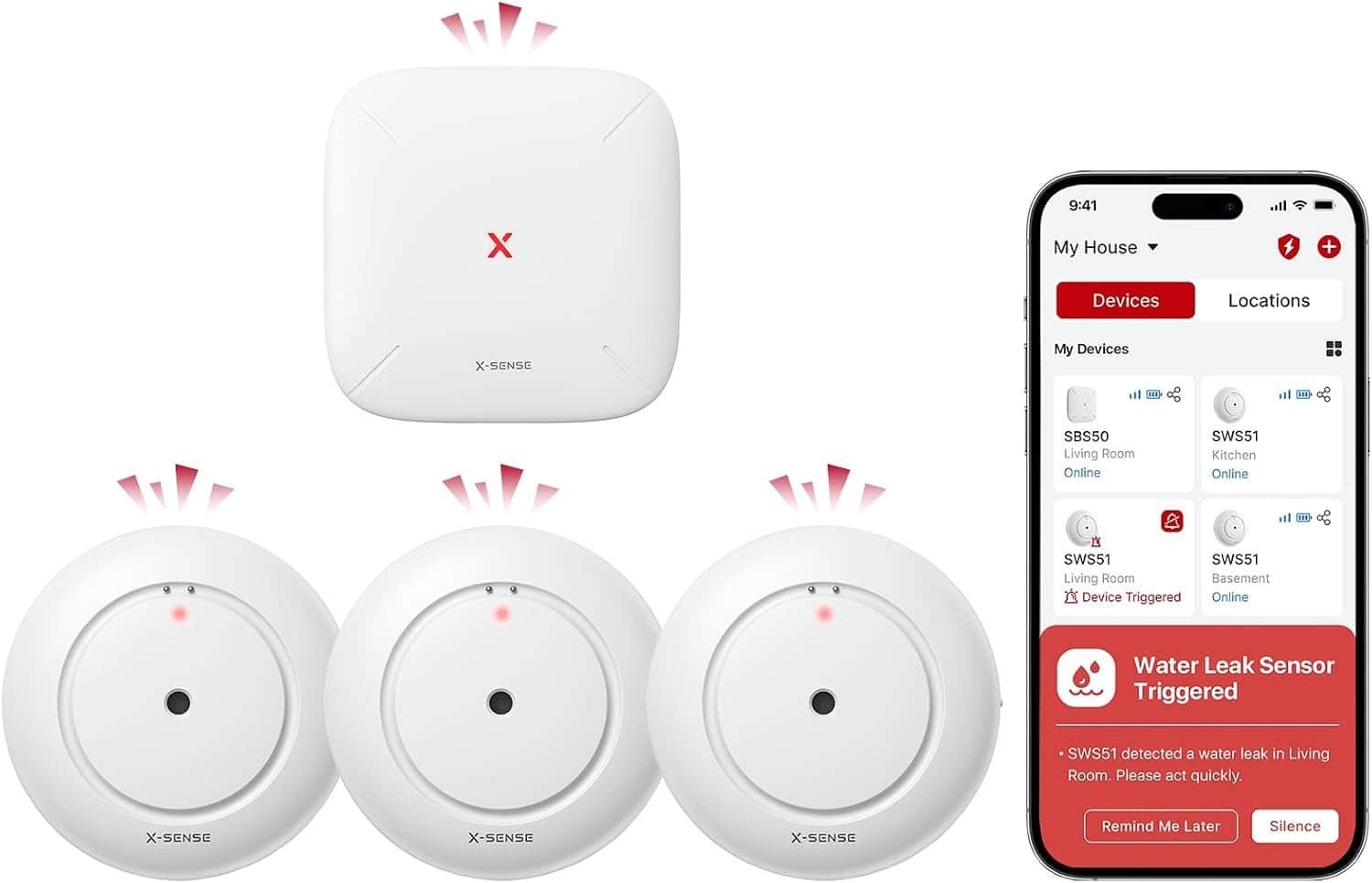
5. X-Sense Wi-Fi Water Leak Detector Kit — Best Multi-Sensor Kit
The X-Sense Wi-Fi Water Leak Detector Kit is another strong choice when one detector isn’t enough.
Available kits combine multiple water sensors with the required base-station architecture, allowing homeowners to distribute protection around several high-risk locations.
This approach makes sense because leaks can occur almost anywhere water enters or travels through the home.
Instead of trying to decide whether your washing machine or water heater is more likely to leak, you can monitor both.
 What We Like
- Multi-sensor kits available
- Loud local alarm
- Remote alerts through compatible system
- Good option for kitchens and basements
- Centralized system for several locations
- Straightforward expansion strategy
What Could Be Better
As with GoveeLife, check the exact X-Sense model and package.
The company offers multiple detector configurations, so don’t assume that features advertised for one model automatically apply to another.
Who Should Buy It?
Families who want a ready-made kit that can immediately cover several plumbing and appliance locations.
Verdict: A convenient alternative to buying individual leak detectors one at a time.
Why Smart Water Leak Detectors Are Worth Considering
Water doesn’t need to arrive as a dramatic burst pipe to create problems.
Slow plumbing leaks, loose appliance hoses, failed seals, condensation problems, and aging fixtures can all introduce unwanted water.
The EPA notes that leaks may result from factors including old piping, worn fixtures, corrosion, freezing temperatures, irregular water pressure, equipment malfunctions, and installation problems.
A traditional leak alarm can sound when it gets wet.
A smart detector adds something especially useful: remote awareness.
If you’re at work, traveling, or asleep on another floor, a phone notification can alert you that something needs attention.
Where Should You Put Water Leak Sensors?
Strategic placement is more useful than randomly scattering sensors around the house.
Kitchen
Start underneath the kitchen sink.
The cabinet contains supply lines, drain plumbing, and sometimes filtration equipment.
Then consider:
- Dishwasher
- Refrigerator with water/ice line
- Under-sink water filter
- Garbage-disposal plumbing
Basement
Basements deserve special attention because leaks can remain unnoticed longer.
Consider sensors around:
- Water heater
- Washing machine
- Utility sink
- Plumbing manifolds
- Sump-pump area
- Water softener
- Basement bathroom
- HVAC equipment where condensation may occur
Other High-Risk Areas
Don’t stop at the kitchen and basement.
Bathrooms, laundry rooms, mechanical rooms, and any appliance connected to a water line may also benefit from monitoring.
What to Look for in a Smart Water Leak Detector
1. Remote Notifications
 If you’re buying a smart detector, remote alerts are one of the most valuable features.
Confirm whether alerts require:
- Wi-Fi
- A proprietary hub
- Bluetooth
- Another smart-home hub
 2. Audible Alarm
Phone notifications shouldn’t be your only warning.
A loud onboard alarm can immediately alert anyone who’s already at home.
3. Sensor Coverage
 Look at how the device detects water.
Some products detect water only at contacts underneath the unit, while others provide additional sensing points or optional cables.
Think about how water would actually travel in the location you’re protecting.
4. Wireless Range
This matters enormously in basements and large homes.
A sensor installed near a basement water heater may have to communicate through floors and walls to reach the network equipment upstairs.
5. Battery Life
 Long battery life reduces maintenance, but don’t install a sensor and forget it forever.
Test your detectors periodically and replace batteries according to manufacturer recommendations.
6. Smart-Home Compatibility
If you’re already invested in a smart-home ecosystem, integration may influence your decision.
Aqara, YoLink, GoveeLife, and other ecosystems offer different automation possibilities.
7. Automatic Shutoff
Basic detectors warn you.
 More sophisticated systems can potentially trigger or directly control a water shutoff.
That feature can be especially appealing for vacation homes or properties left unattended for long periods.
Smart Leak Sensor vs. Whole-Home Water Monitor
These products solve related but different problems.
A smart leak sensor detects moisture at a specific location.
Advantages include:
- Affordable
- Easy installation
- Excellent for appliances
- Easy to add more sensors
A whole-home flow monitor watches water usage through the plumbing system.
Advantages can include:
- Broader monitoring
- Detection of unusual water use
- Potential automatic shutoff
- Whole-property visibility
For many households, inexpensive spot sensors are the logical starting point.
Homeowners seeking more extensive protection may consider combining spot detection with whole-home flow monitoring.
Do Smart Water Leak Detectors Work if Wi-Fi Goes Down?
This depends on the system.
Many smart detectors can still sound their local alarm when moisture is detected even if internet connectivity is unavailable.
However, cloud-based phone notifications may require an active internet connection.
Some hub-based systems also provide local communication between compatible devices.
If internet outages are common in your area, investigate exactly what happens when connectivity disappears before purchasing.
How Many Water Leak Detectors Do You Need?
There’s no universal number.
Instead, count your high-risk locations.
For example, a house might need:
- Kitchen sink
- Dishwasher
- Refrigerator
- Washing machine
- Water heater
- Basement utility sink
- Sump area
That would already create seven potential sensor locations.
This is why affordable multi-packs from brands such as GoveeLife, YoLink, and X-Sense can make more sense than purchasing one premium spot sensor.
Frequently Asked Questions
What is the best smart water leak detector?
For most households, we like the GoveeLife Water Leak Detector 2 because it offers a practical balance between smart functionality, multi-location coverage, and affordability.
Different homes have different requirements, though. YoLink is particularly compelling for long-range applications, while Flo by Moen targets whole-home protection.
Are water leak detectors worth it?
They can be an inexpensive way to receive earlier warning of unwanted water.
The EPA specifically recommends considering leak-detection or flow-monitoring systems to identify unintended moisture or irregular water-use patterns.
Where should a leak detector go in a kitchen?
Start beneath the sink and near the dishwasher.
If your refrigerator has an ice maker or water dispenser, the refrigerator water line is another location worth considering.
Where should I place a water detector in my basement?
Prioritize the water heater, washing machine, utility sink, sump area, water softener, and exposed plumbing.
Do smart water detectors require a subscription?
Not necessarily.
Subscription requirements vary by manufacturer and service. Check the current terms for the exact product you’re considering rather than assuming all features are free indefinitely.
Can a smart leak detector automatically shut off my water?
Some systems can.
Whole-home products such as Flo by Moen are specifically designed around monitoring and shutoff capabilities. Other smart-home ecosystems can potentially pair leak sensors with compatible shutoff hardware.
How often should I test water leak sensors?
Don’t install them and forget them.
The EPA recommends checking installed leak-detection and flow-monitoring systems at least annually to ensure they’re operating correctly.
Testing more frequently according to the manufacturer’s instructions can provide additional reassurance.
Final Verdict
For most homes, the GoveeLife Water Leak Detector 2 is our best overall choice because it provides an accessible way to monitor multiple leak-prone locations.
For a basement or large property where wireless range is particularly important, the YoLink Water Leak Detection Starter Kit is our preferred alternative.
If you want a more sophisticated system capable of monitoring water at the whole-home level, the Flo by Moen Smart Water Monitor & Shutoff is in a different league—but it also requires a substantially larger investment.
Existing Aqara users should strongly consider the Aqara Water Leak Sensor, while the X-Sense Wi-Fi Water Leak Detector Kit provides another convenient route to multi-room protection.
Whatever system you choose, placement matters just as much as the brand.
Start with the places where water is most likely to escape unnoticed: beneath the kitchen sink, beside the dishwasher and washing machine, around the water heater, and in basement utility areas.
A smart leak detector can’t prevent every plumbing failure.
But detecting unwanted water earlier—and knowing about it even when you’re away from home—can give you valuable time to investigate and respond before a small leak becomes a much bigger problem.