A small water leak can quickly become a big household problem. A dripping dishwasher connection, leaking refrigerator line, overflowing sink, failing water heater, or basement pipe can release water long before anyone notices it.
That’s why a smart water leak detector is one of the simplest smart-home devices worth considering.
Unlike a basic moisture alarm that only sounds locally, many smart leak detectors can send notifications to your phone. Depending on the model, you may also get email alerts, freeze warnings, temperature monitoring, smart-home integrations, or compatibility with an automatic water shutoff system.
For kitchens and basements in particular, the challenge isn’t simply choosing the cheapest sensor. Basements can have weaker Wi-Fi coverage, while kitchens contain multiple potential leak points packed into relatively small spaces.
Current 2026 comparisons continue to recommend a mix of Wi-Fi, Zigbee, and long-range LoRa-based systems, with the right choice depending heavily on where you need coverage and which smart-home ecosystem you already use.
Here are five options worth comparing.
Table of Contents
Quick Comparison
| Product | Best For | Connection | Standout Feature |
|---|---|---|---|
| GoveeLife Water Leak Detector 2 | Best Overall | LoRa + gateway | Long-range coverage + loud alarm |
| YoLink Water Leak Sensor 4 | Basements | LoRa + hub | Excellent range and multi-sensor expansion |
| Moen Smart Water Detector | Premium Protection | Wi-Fi ecosystem | Works within Moen water-protection ecosystem |
| Aqara Water Leak Sensor | Smart Homes | Zigbee + Aqara Hub | Broad automation possibilities |
| Kidde Water Leak + Freeze Detector | Cold Basements | Wi-Fi | Leak and freeze monitoring |
1. GoveeLife Water Leak Detector 2 — Best Overall
The GoveeLife Water Leak Detector 2 is an excellent starting point for homeowners who want to cover multiple areas without depending on strong Wi-Fi at every individual sensor.
Instead of having each sensor communicate directly with your router, the system uses LoRa communication between its sensors and gateway. That’s particularly attractive in basements, utility rooms, garages, and other areas where ordinary wireless coverage may be inconsistent.
The Detector 2 also includes a 100-dB onboard alarm, giving you an immediate local warning in addition to remote notifications. Current product information describes app, email, and text alerts through the system.
Why We Like It
- Long-range LoRa communication
- Loud 100-dB local alarm
- Suitable for multi-room coverage
- Remote alerts
- Useful around appliances and plumbing fixtures
- Particularly attractive for basements
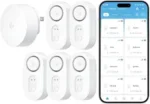
GoveeLife’s long-range approach makes it easy to imagine a whole-house deployment: one sensor underneath the kitchen sink, another behind the dishwasher, one near the washing machine, and additional sensors around the basement water heater and sump area.
 Best For
Homeowners who want multiple affordable leak-detection points across a relatively large property.
Potential Drawback
The Detector 2 is less appealing if extensive third-party smart-home integration is your priority. Current comparisons note that the Aqara ecosystem provides broader integration possibilities.
Amazon: Shop GoveeLife Water Leak Detector 2 on Amazon
2. YoLink Water Leak Sensor 4 — Best for Basements
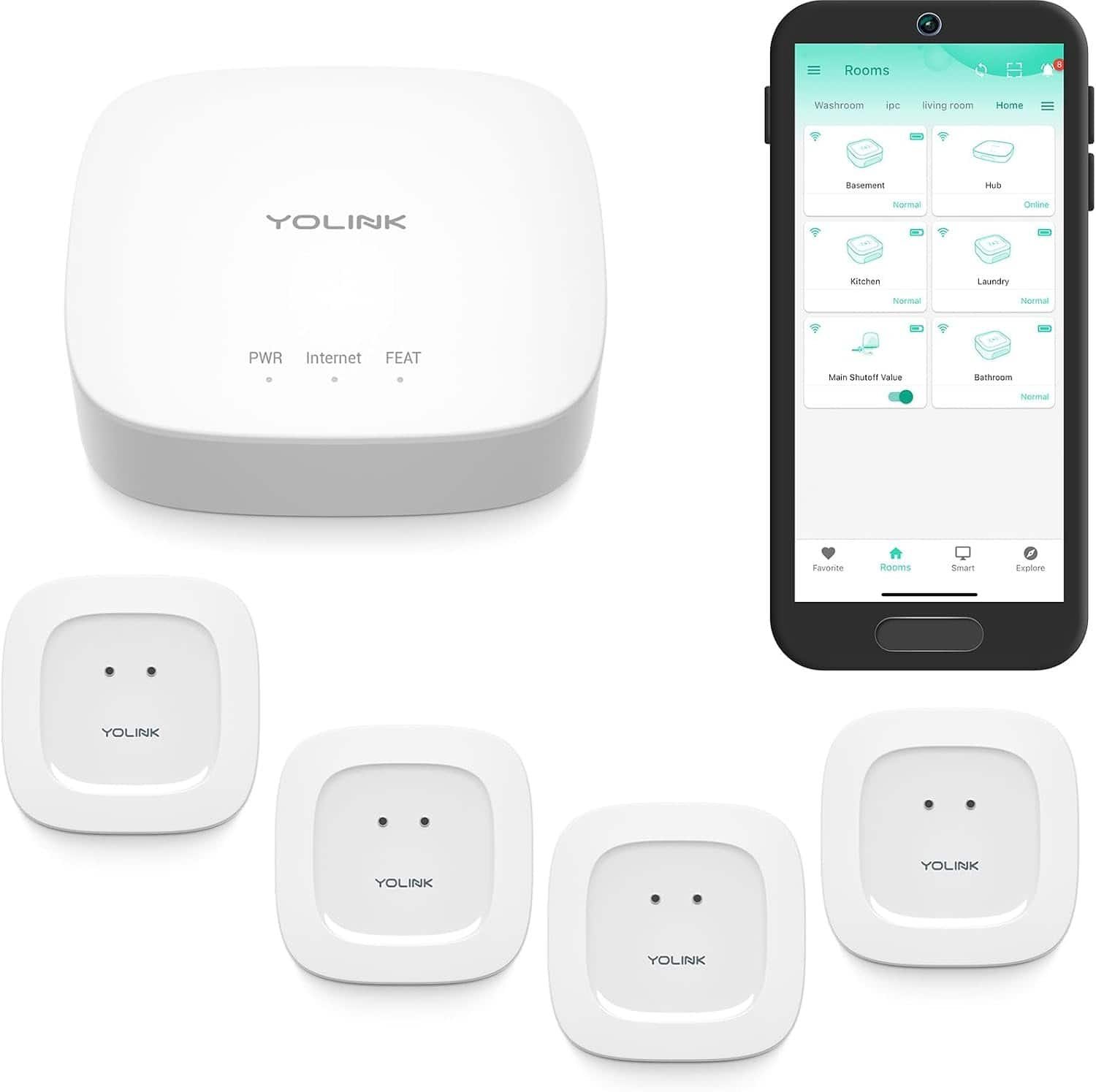
Amazon link:Amazon.com: YoLink Water Leak Starter Kit: Hub + 4 Leak Sensor 1 (Silent), LoRa Long-Range, App/SMS/Email Alerts, D2D Offline Triggers, 2 AAA Up to 5-Year Battery, Compatible with Alexa/IFTTT/Home Assistant : Industrial & Scientific
Basements present a particular problem for smart-home devices.
Your router might be upstairs at the opposite end of the house, with concrete, ductwork, walls, and appliances between it and your sensor.
The YoLink Water Leak Sensor 4 tackles that issue with a long-range LoRa-based system.
Current 2026 comparisons highlight YoLink’s strong battery life, local alarm capabilities, long-range communication, and extensive sensor options. It requires a compatible YoLink hub rather than operating as an entirely standalone sensor.
 Why We Like It
- Excellent long-range communication
- Particularly suitable for basements
- Expandable system
- Local audible/visual alert capabilities
- Long battery-life positioning
- Can be paired with additional YoLink devices
YoLink becomes particularly compelling when you need many sensors rather than just one.
You might place detectors near:
- Water heater
- Sump pump
- Basement bathroom
- Washing machine
- Utility sink
- HVAC equipment
- Kitchen sink
- Dishwasher
- Refrigerator water line
Community discussions also frequently mention YoLink for multi-sensor installations across kitchens, basements, bathrooms, and laundry areas.
Best For
Large homes, basements, garages, utility rooms, and other areas located far from the router.
Amazon: Shop YoLink Water Leak Sensors on Amazon
3. Moen Smart Water Detector — Best Premium Water-Protection Ecosystem
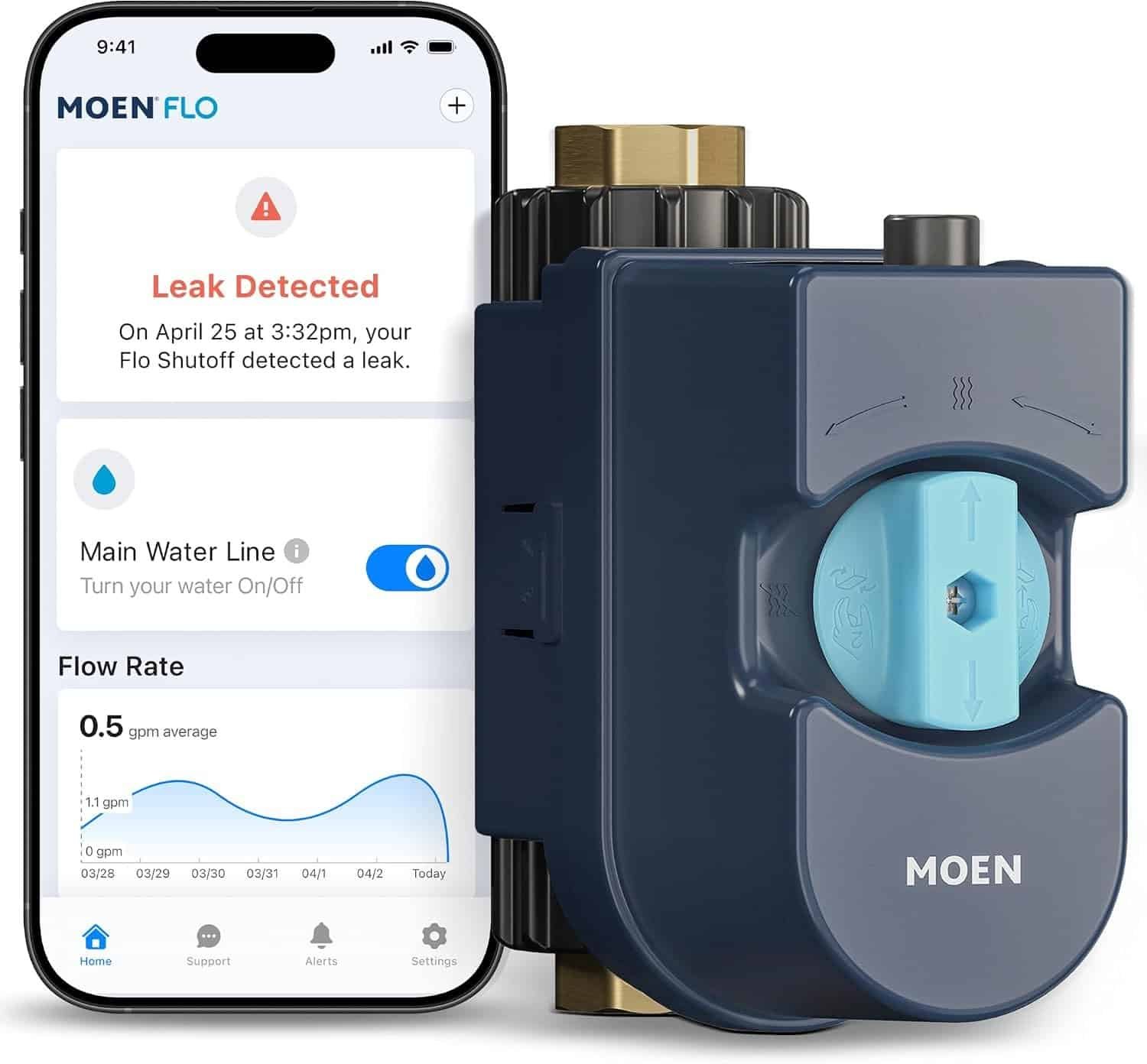
Amazon link: Moen Flo Shutoff, 3/4″ Automatic Water Leak Detector & Shutoff, 900-001 | Automatic Shutoff, Leak Detection, MicroLeak Tests, Monitors Flow, Pressure, Moisture, and Temperature, WiFi App Control – Tub And Shower Faucets – Amazon.com
If you’re thinking beyond simple puddle detection, Moen’s smart water ecosystem deserves attention.
The company’s point leak detector can monitor vulnerable areas, while Moen also offers its Flo Smart Water Monitor and Shutoff for homeowners interested in broader water monitoring and automatic shutoff functionality.
That’s an important distinction.
A conventional smart leak detector generally tells you:
“Water has reached this sensor.”
A whole-home monitoring and shutoff system can potentially take protection further by monitoring the home’s water supply and controlling it when appropriate.
Current comparisons continue to place Moen among the prominent premium smart water-protection options.
 Why We Like It
- Established plumbing brand
- Suitable for kitchens and basements
- Remote smart alerts
- Can fit into a larger Moen water-management setup
- Attractive upgrade path for homeowners seeking whole-home protection
Best For
Homeowners who may eventually want something more comprehensive than several standalone sensors.
Leak Sensor vs. Smart Shutoff
Don’t confuse Moen’s spot water detector with the Flo Smart Water Monitor and Shutoff.
The latter is a more involved whole-home system and may require professional installation depending on your plumbing configuration.
Automatic shutoff is potentially valuable when nobody is home. However, compatibility, installation requirements, plumbing configuration, and ongoing service terms should all be checked before buying.
Amazon: Shop Moen Smart Water Leak Detectors on Amazon
4. Aqara Water Leak Sensor — Best for Smart-Home Automation
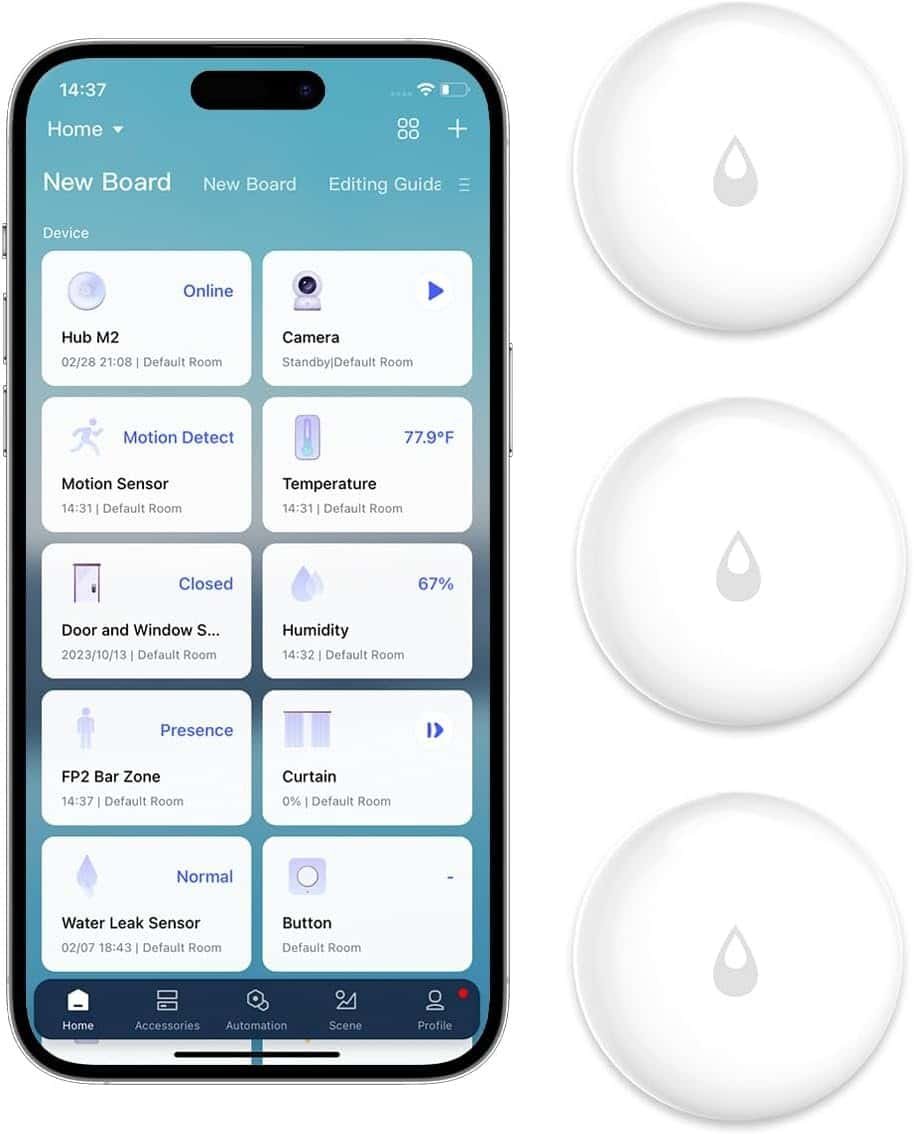
Amazon link: Amazon.com: Aqara Water Leak Sensor 3 Pack, Zigbee Water Leak Detector for Alarm System | Requires AQARA HUB, App Notifications, Smart Home Automation, for Kitchen, Bathroom, Basement, Wireless, Works with IFTTT : Industrial & Scientific
The Aqara Water Leak Sensor becomes a natural candidate.
It’s a compact Zigbee-based sensor designed to operate with an appropriate Aqara hub.
This hub requirement can initially look like a disadvantage compared with a standalone Wi-Fi detector, but hub-based sensors have advantages for people building a larger smart-home system.
Current comparisons highlight Aqara’s compact design, IP67 rating, affordability, and broad integration possibilities through its ecosystem.
 Why We Like It
- Compact design
- IP67-rated construction
- Zigbee connectivity
- Good fit for established Aqara households
- Automation possibilities
- Easy to place in confined spaces
That compact form factor is particularly useful in kitchens.
A sensor can fit underneath a sink cabinet or near appliances without taking up much room.
Where to Put It
Try locations such as:
- Beneath kitchen sinks
- Next to dishwasher supply lines
- Near refrigerator water connections
- Under utility sinks
- Near basement plumbing
Important Consideration
The Aqara sensor depends on compatible hub hardware.
If you’re buying only one leak detector and don’t own an Aqara hub, another option could be simpler.
But if you’re already using Aqara products, adding water sensors can make considerable sense.
Amazon: Shop Aqara Water Leak Sensor on Amazon
5. Kidde Water Leak + Freeze Detector — Best for Cold Basement
Amazon link: Kidde WiFi Water Leak Detector & Freeze Alarm, Alexa Device, Smart Leak Detector for Homes with App Alerts,White – Amazon.com
A basement doesn’t only face the risk of water appearing on the floor.
Cold temperatures can create another concern: freezing pipes.
That’s why a detector capable of providing both water-leak and freeze-related warnings can be attractive in colder climates.
The Kidde Water Leak + Freeze Detector combines smart leak monitoring with temperature-related protection.
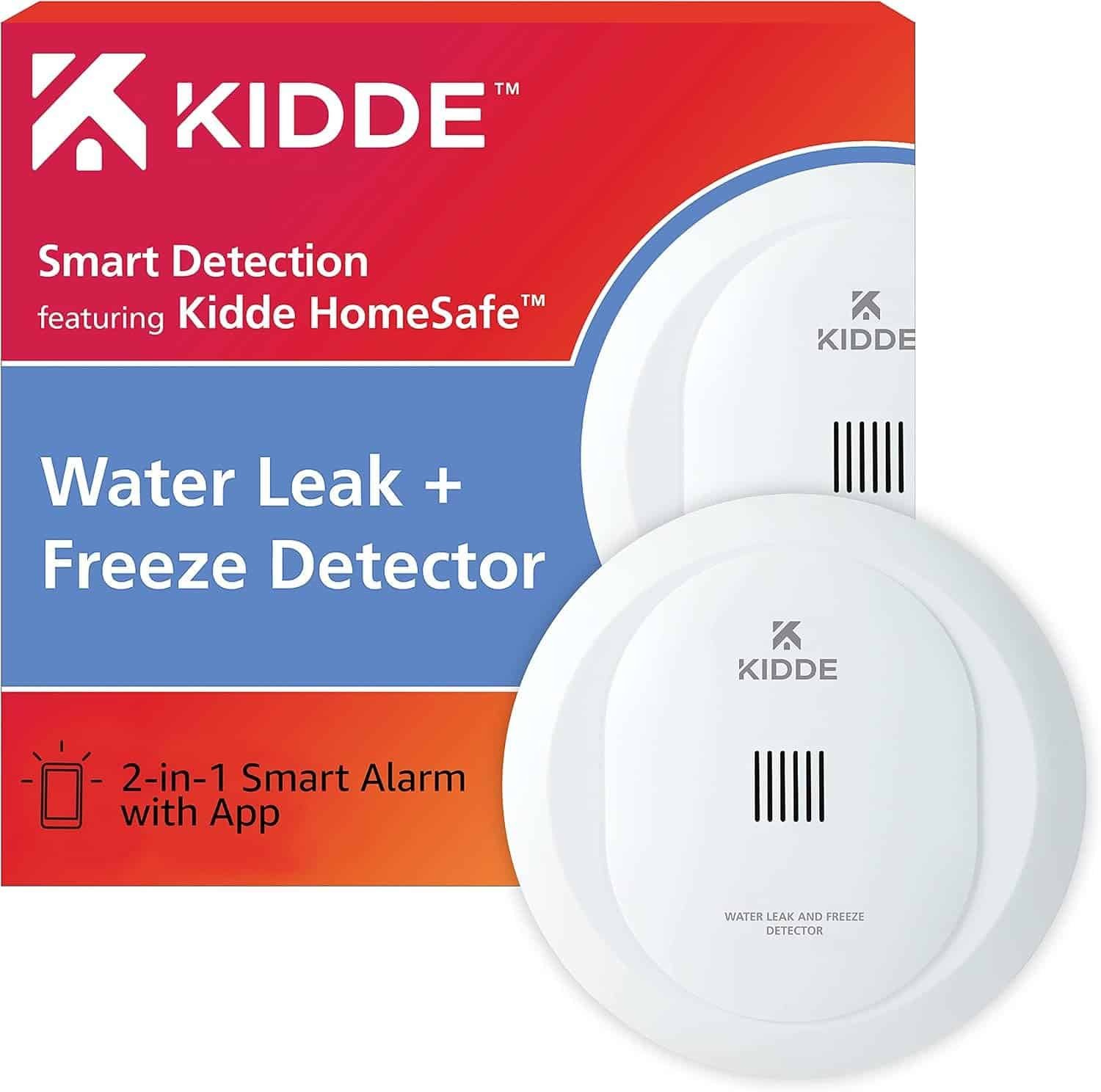 Why We Like It
- Detects water leaks
- Freeze-warning functionality
- Wi-Fi connectivity
- Remote notifications
- Particularly relevant for basements and utility areas
- Recognizable home-safety brand
Best For
Cold basements, vacation homes, utility rooms, cabins, and other areas where low temperatures may be a concern.
If your basement remains climate-controlled throughout the year, freeze detection may not matter much.
If temperatures can drop significantly during winter, however, it becomes a genuinely useful extra layer of monitoring.
Amazon: Shop Kidde Water Leak + Freeze Detector on Amazon
Our Top Smart Leak Detector Picks
Why Kitchens Need Water Leak Detectors
Your kitchen contains more potential water sources than you might realize.
There’s the obvious sink, but also:
Dishwasher: Supply hoses, drain lines, seals, and connections can leak.
Refrigerator: Models with water dispensers or ice makers have supply lines that can fail.
Garbage disposal: Connections and seals underneath the sink can drip.
Water filter: Under-sink filtration and reverse-osmosis systems add tubing and connections.
Sink plumbing: Drain traps, supply valves, faucets, and flexible hoses can all develop leaks.
The biggest issue is visibility.
A small leak beneath a dishwasher or inside a cabinet may continue for a considerable period before becoming obvious.
A sensor positioned at floor level can potentially detect water much earlier.
Why Basements Need Extra Protection
Basements present an entirely different set of risks.
Common sources include:
- Water heaters
- Washing machines
- Utility sinks
- Sump pumps
- Foundation water intrusion
- HVAC equipment
- Plumbing lines
- Basement bathrooms
- Frozen pipes
Because basements may be visited less frequently than kitchens, water can potentially accumulate unnoticed.
Connectivity also matters.
A basic Wi-Fi detector isn’t very “smart” if it can’t reliably communicate from the basement.
This is where long-range systems such as YoLink and GoveeLife become particularly interesting. Current comparisons emphasize LoRa’s ability to provide substantially greater reach than typical short-range smart-home communication.
Wi-Fi vs. LoRa vs. Zigbee Water Sensors
Understanding connectivity will make shopping considerably easier.
Wi-Fi
Wi-Fi sensors communicate through your home’s wireless network.
Advantages
- Familiar setup
- Often doesn’t require a proprietary hub
- Remote alerts
- Straightforward for small installations
Disadvantages
- Coverage can be weak in basements
- Network outages can affect remote functionality
- Wi-Fi can consume more battery power than some low-power protocols
Some smart-home users specifically prefer hub-based sensors because they don’t want every detector dependent directly on Wi-Fi.
Zigbee
A Zigbee detector communicates with a compatible hub.
Aqara is the obvious example from this roundup.
Advantages
- Low-power communication
- Good for larger smart-home ecosystems
- Automation flexibility
- Multiple sensors can share one hub
Disadvantages
- Requires compatible hub hardware
- Ecosystem compatibility needs checking
LoRa
LoRa prioritizes long-range, low-power communication.
Both GoveeLife and YoLink use long-range approaches for selected leak-detector systems.
Advantages
- Excellent range
- Useful for basements and detached areas
- Good for larger properties
- Designed for low-power IoT communication
Long-range wireless leak-detection technology remains an active area of development because of these characteristics.
Where Should You Place Smart Water Leak Detectors?
Buying excellent detectors won’t help much if they’re placed in the wrong locations.
Prioritize areas where plumbing or appliances could release water.
Kitchen Placement
Put sensors:
- Under the kitchen sink
- Beside or underneath the dishwasher
- Behind the refrigerator if it has a water line
- Near an under-sink water filter
- Around other water-connected appliances
You want the sensor positioned where leaking water is likely to travel first.
Basement Placement
Prioritize:
- Water heater
- Sump pump
- Washing machine
- Utility sink
- HVAC condensate equipment
- Basement bathroom
- Main water entry area
- Known low spots where water accumulates
For particularly important locations, don’t rely on a single sensor to protect an entire basement.
Water follows gravity and floor contours. A leak on one side of the room may never reach a detector on the other.
Features to Look for Before Buying
1. Fast Leak Detection
Early detection is the entire purpose of the device.
Look for sensors with contacts positioned to detect small amounts of water rather than waiting for substantial flooding.
2. Local Audible Alarm
Phone alerts are excellent—but your phone might be muted.
A loud local alarm provides another warning mechanism.
GoveeLife’s Detector 2, for example, includes a 100-dB alarm.
3. Remote Notifications
A smart detector should ideally notify you while you’re away.
This is particularly valuable when you’re:
- At work
- Traveling
- Away for the weekend
- Managing a vacation property
4. Battery-Life Monitoring
A leak detector with a dead battery isn’t useful.
Choose a system that makes it easy to check battery status and preferably provides low-battery warnings.
5. Connectivity Range
This is crucial for basements.
If your router is several floors away, verify coverage before relying on a Wi-Fi-only detector.
6. Freeze Alerts
For cold basements, garages, cabins, and seasonal properties, temperature monitoring can add significant value.
7. Expandability
One sensor is rarely enough for an entire house.
Consider the cost of building a system with five, ten, or even more sensors, not merely the initial purchase price.
8. Automatic Shutoff Compatibility
This is the premium feature.
Detection tells you something is wrong.
Automatic shutoff can potentially help limit continued water flow.
Whole-home systems such as Flo by Moen take this approach further than basic spot detectors.
Smart Leak Detector vs. Automatic Water Shutoff
These products solve related but different problems.
A smart leak detector identifies water at a specific location.
An automatic shutoff system can potentially close the home’s water supply when predefined conditions indicate a serious leak.
For many households, a practical strategy is layered protection:
Layer 1: Point sensors underneath vulnerable appliances.
Layer 2: Smart notifications.
Layer 3: Whole-home monitoring and automatic shutoff where appropriate.
A 2026 smart-water-system comparison similarly describes effective protection as a combination of monitoring, shutoff capability, and point sensors.
How Many Water Leak Detectors Do You Need?
For a small home, you might start with four or five.
For example:
- Kitchen sink
- Dishwasher
- Washing machine
- Water heater
- Sump pump
Larger homes can easily justify ten or more.
Instead of asking, “How many sensors does my house need?” ask:
“How many places could release water without me immediately noticing?”
That usually produces a much more useful answer.
Frequently Asked Questions
What is the best smart water leak detector for a basement?
The YoLink Water Leak Sensor 4 is particularly compelling for basement installations because its long-range communication reduces reliance on strong Wi-Fi coverage at the sensor. GoveeLife is another strong long-range alternative.
What is the best water leak detector for a kitchen?
For straightforward multi-point kitchen coverage, GoveeLife Water Leak Detector 2 is a strong option. Aqara is particularly attractive if you already have an Aqara smart-home hub.
Where should I put a leak detector under my kitchen sink?
Place it at the lowest point where water from supply lines, drain plumbing, garbage disposal connections, or filtration equipment is likely to collect.
Do smart water leak detectors work without Wi-Fi?
It depends on the product. Some sensors communicate locally with a dedicated hub through Zigbee or LoRa rather than connecting directly to Wi-Fi. However, internet connectivity may still be necessary for remote phone notifications and cloud features.
Can a smart water detector shut off my water automatically?
A standard sensor generally cannot do this by itself. You’ll need a compatible valve controller or whole-home system designed for automatic shutoff. Always verify compatibility before purchasing.
Are water leak detectors worth buying?
For many homeowners, yes. They’re relatively simple devices that can provide an early warning around appliances, plumbing, and other vulnerable areas. They don’t prevent every possible type of water damage, but they can provide valuable additional monitoring.
Final Verdict
The best smart water leak detector for kitchens and basements depends primarily on the size of your home and the type of smart-home system you want.
For a strong balance of range, alerts, and multi-location coverage, the GoveeLife Water Leak Detector 2 is our best overall choice.
For difficult basement locations and larger properties, YoLink Water Leak Sensor 4 stands out because of its long-range architecture. Current comparisons give YoLink an edge over GoveeLife in several areas, including battery life and integrations.
Choose Moen if you want a potential path toward more comprehensive water monitoring and automatic shutoff. Choose Aqara if smart-home automation and Zigbee integration are priorities. And consider Kidde when basement freeze warnings are particularly important.
Whichever system you select, don’t protect only the most obvious location. Place sensors around your kitchen sink, dishwasher, refrigerator water line, washing machine, water heater, sump pump, and basement plumbing.
The best leak detector is ultimately the one positioned close enough to a potential problem—and connected reliably enough—to warn you before a small amount of water becomes a much larger problem.